
Tag Archives: Food producers
07 Mar |
Spotlight on Local Food Producers in Gloucestershire |
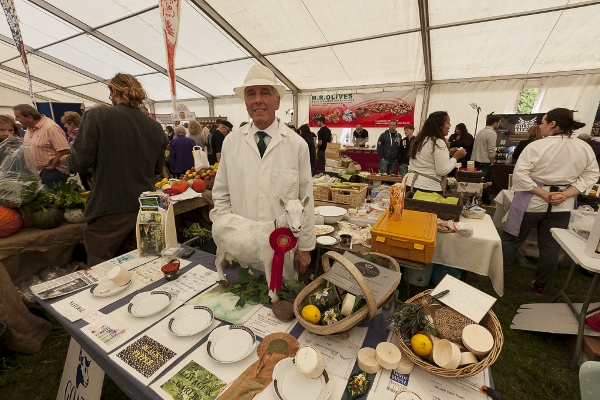 From beer to fish to fruit and meat (not forgetting cheese of course), Gloucestershire has it all when it comes to local food producers. Uniquely situated in the heart of England, the county is renowned for its fine food and beverages and suppliers are plentiful.
Let’s start with cheese. Gloucestershire has a well earned reputation for excellent cheeses, ranging from the conservative cheddar to more exotic varieties, such as chilli and smoked. One of the most popular suppliers is Godsells Cheese, who makes handmade cheeses at Church Farm, in the Gloucestershire village of Leonard Stanley. The company uses milk from its own herd of cows, producing such delights as Double Gloucester, Single Gloucester, Hooded Monk, Leonard Stanley, Three Virgins, Holy Smoked, Singing Granny, Nympsfield and Scary Mary Cheeses.
The company is one of only four cheesemakers in Gloucestershire able to make Single Gloucester cheese with a Protected Designated Origin. This means it can only be made in Gloucestershire. The Cheddar is aged for a minimum of seven months, while Scary Mary is a Nympsfield (a fresh soft cheese) left to go mouldy!
Mighty Meat
Moving onto meat and Macaroni Farm supplies a range of organic meat to suit all tastes. The farm dates back to the late 1600’s, and has been in the Phillips family since 1891. The farm supplies extensively and traditionally reared organic beef, slaughtered locally to keep ‘food miles’ to a minimum. It is hung for 28 days to allow the meat to tenderise and reach maturity. Its award winning organic lamb is available as whole or half lambs direct from the farm. Pheasant and partridges are available throughout the shooting season.
If its venison you are after, look no further than the Withington Estate for Withington Wild Venison, which is hunted from the estate’s managed woodland. All of the venison (roe and fallow) is truly wild, neither farmed nor from a deer park.
Fruit and Veg
Gloucestershire is also famous for its many varieties of fruit and at Bentleys Castle Fruit Farm you are assured of a huge range. Plum varieties include Herman, Opal, Reeves Seedling, Avalon, Victoria, Valor and Marjorie Seedling. There over 12 seasonal varieties of apples, two varieties of pears and seven varieties of cherries. There are a range of juices, sauces, syrups and relishes all made from freshly pressed apples, pears and plums .
For farm grown fruit and vegetables, Over Farm grows more than 20 different crops throughout the year which are sold in its farm shop, from asparagus in spring, strawberries in the summer, pumpkins and squash in autumn and sprouts in the winter.
Finally, it’s worth mentioning Cheltenham’s David’s Chilli Oil “created with passion and a commitment to enliven food with delicious heat.” Perfect for drizzling over hot or cold food, marinating, cooking and dipping. The heat of the chilli comes from the capsaicin oil which is present in the chilli found mostly in the seeds and the ribs of chilli peppers. Here’s a little known tip: drinking water to cure a burning mouth is useless. Try fat instead such as milk, yoghurt and even peanut butter!
AC Services Southern believes in supporting local food producers in Gloucestershire and the other counties we serve. Look out for our next spotlight in our local food producers series.
Published Date: 7th March 2017
Category: Blog, Catering Business, News
Tags: AC Services, Food producers
28 Feb |
Food Trends 2017 Personal and Exotic |
 Trends come and go in the food industry with new, exotic and unusual menus springing up everywhere. We’ve come a long way from the prawn cocktail and black forest gateaux of the 1970s, which, if those of a certain age recall, was the menu of sophistication.
So what are the food trends 2017? Apparently, food is to get personal again, with the consumer calling the shots. The recent Waitrose report highlighted that the humble aubergine is fast replacing traditional carbs such as bread and pasta. The store reported an 18% increase in sales of the vegetable, with an increasing number of people opting to replace burger buns, chips and pasta for aubergine substitutes.
According to Olive Magazine, vegan food is getting a lot of attention so get your barley risotto recipe perfected. Grains are the in-food at the moment with many chefs using them in salads as a healthy and hearty food group. Look for siyez salads as the new superfood.
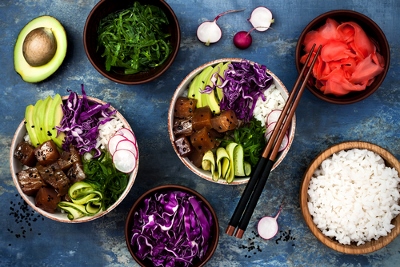
Following on from a surge in interest in Jamaican food, ital (jerk spices and citrus flavours) is having an influence on vegan cooking in the UK. Also look out for Polynesian favourite poke. This raw fish salad marinated with lime, soy and sesame is becoming a fast favourite.
Vegetable yoghurt comprising carrot, beetroot, sweet potato and tomato flavours infused with yoghurt is becoming increasingly popular. For those who wrinkle their noses at the concept, think of the UK’s old favourites, chive and onion dip or cucumber raita!
Ant Fever and Other Superfoods
It may not be to everyone’s taste and indeed some thought it a joke at first but insects are most definitely on the menu. Meadowsweet porridge with ants won last year’s Rude Health Porridge Championship. They are said to balance the sweetness of the porridge with a certain sharpness and, a mantra for all things healthy, they are packed with protein.
Other superfoods to look out for are red algae, described as ‘bacon flavoured seaweed’; Kakadu plums said to contain 100 times more vitamin C than an orange; offal such as beef and pork hearts, liver, brain, kidney and other organs; goji berries; bone broth; coconut sugar; and pea protein which is both dairy and gluten free and 100% vegan friendly.
Watch out for variations on the traditional dough found in pizzas. The Dough restaurant in Bristol for example offers a choice of pizza base: turmeric and seaweed two options! And there are now more recipes for using miso. Allegedly it goes very well with marmite or mashed with sweet potato.
Fruit and Veg
At a time when the industry is worrying about fruit and veg, or rather the availability of some of our favourites, new names have started to emerge. Rambutan, mangosteen and kumquats are primed to hit British supermarkets. As is camel’s milk, which has 10 times more iron and three times more vitamin C than cow’s milk.
On the beverage front, watch out for orange wine which is proving very popular. Or there is Aquavit with its botanical infusions of caraway or dill. And watermelon water, which is essentially cold-pressed watermelon juice is supposed to be ideal for natural rehydration.
In the week that it was announced that British strawberries are available two months early, it is clear that traditional thinking may no longer work as well in the commercial kitchen. So have a look at the food trends 2017 and see what might work for you.
Published Date: 28th February 2017
Category: Blog, Catering Business, News
Tags: Catering business, Food producers
24 Jan |
Inclement Times for Fruit and Vegetables |
 Nobody enjoys bad weather. We have experienced storms, snow and gales over the past month and for the majority of people, spring cannot come soon enough. However, spare a thought for the farmers and importers of fruit and vegetables not only in the UK but all over the world.
According to a recent report from the BBC, bad weather including flooding, poor light levels and cold has created a ‘perfect storm’ of poor growing conditions.
Heavy rainfall in Spain’s south-eastern Murcia region has led to intense flooding. Italy has experienced extreme cold weather. The combined result is a number of field crops such as peppers, aubergines, lettuce, courgette and broccoli failing!
Putting this into context, Murcia is estimated to supply about 80% of Europe’s fresh produce during the winter months. With the heaviest rainfall in 30 years, this now threatens its production ability. Hence supermarket shortages of lettuce and courgettes.
Importing Lettuce
“The situation has got so bad that some fruit and vegetables suppliers have taken to importing lettuces from the US, a development that up until now has been pretty much unheard of,” said Nationwide Produce food marketing company managing director, Mr O’Malley. He continues saying that both the price and availability of vegetable crops is likely to be affected, with poor planting conditions meaning that some crops planted before Christmas for harvest in 2017 are also likely to suffer.
According to the report, “the yield of courgettes, aubergines, tomatoes, broccoli and peppers from Spain are down by about 25%, while prices had risen between 25% and 40%”.
This is particularly worrying for Britain which imports 50% of its vegetables and 90% of its fruit. In 2015, the UK exported £18 billion worth of food and drink, which is dwarfed by the £38.5 billion it spent on importing food and drink.
Damage Limitation
So what can the UK do in terms of damage limitation? We have already realised that prices have risen after Brexit: whether temporarily or permanently is yet to be determined.
Tony Howard works for a large independent fruit and vegetable wholesaler and cites tomatoes from the Netherlands as an example. “Before Brexit the average price of a box of tomatoes was around £4 and now it is around £6,” he says.”We try to work for a gross profit of around 10%. Secondary wholesalers and catering people have to work for a larger margin because they don’t do the volume that we do. So by the time it gets to somebody’s plate that box of tomatoes could cost £10.”
Do we invest in technology, such as in Japan, where the world’s first entirely automated lettuce farm is due for launch next year? We already have driverless tractors following pre-programmed routes and drones over fields assessing crop health and soil conditions. The Hands Free Hectare project in Shropshire is attempting to farm a field without a human setting foot in it at all.
Or do we capitalise on the shortcomings and adapt the cost and the choice of menus to reflect more seasonal, more local produce? Can local market gardens re-emerge with greater crop offerings?
It appears that to divert a crisis, UK food growers need to come together to devise a solution. The market is already changing regardless of the weather so this must be seized upon as an opportunity to change methods.
A Sliver of Sunshine?
Not all is doom and gloom however. The British Retail Consortium (BRC) states that 75% of fresh food sold in UK stores is raised or grown in the UK. UK supermarkets also sell 75% of the organic food bought in the UK, compared with the 1.7% sold in farmers’ markets.
For organic food, 88% of the carrots, 67% beef, 93% lamb, 100% milk and 100% of eggs are produced in the UK. It could be the same with fruit and vegetables if the food chain works together for the longer term.
Published Date: 24th January 2017
Category: Blog, Catering Business, News
Tags: Brexit, Catering business, Food producers
22 Nov |
Something Different for Christmas 2016? |
 Innovation has been rife in the food industry throughout 2016 and in the South West, new products have been delighting discerning diners.
As it’s almost Christmas 2016, let’s start with a festive offering. Warrens Bakery’s Mince Pie Pasty went viral after a hugely successful trial last year and this year, the bakery is back with the Mince Pie and Custard Pasty.
Described as the world’s oldest Cornish pasty makers, Warrens Bakery has a reputation for tradition. It recently launched its exclusive artisan bread range as proof that the company is continually striving to evolve.
Master baker Jason Jobling said, “We have made the pasty using rough puff pastry, filled it with specially selected mincemeat and a vanilla custard and have crimped it in the same way we would a savoury pasty. It’s glazed and topped with a cinnamon and sugar blend for extra crunch.” All pasties are hand filled, hand crimped and handmade.
What’s Your Pleasure?
What goes well with a pasty? A real ale, of course! Emal Brewery is the third business venture of husband and wife team Emma and Alex Phillips. It is a newly formed family run brewery supplying three uniquely branded ales; Isca Gold, Legio and Castra.
Influenced by the historic Roman city of Exeter where the brewery is located, these new beers are available in both nine gallon cask and bottles if preferred. “An easy-drinking golden ale balancing a touch of caramel sweetness with a gently bitter finish and a fruity hop aroma” is the description of the Isca Gold.
On to ice cream! We may not be experiencing the weather associated with a 99 down on the beach, but Salcombe Dairy has created a range of Christmas flavours, including Christmas Pudding ice cream. It comes with an indulgent brandy butter ice cream topping and is shaped like a traditional pudding…what better way to finish off a Christmas meal.
The ice cream is made using fresh full cream milk and double cream, locally sourced, which is then combined with brandy, dried fruits and mixed spices. Interestingly, Salcombe does not homogenise its ingredients, instead using a seaweed compound (alginate) as an additive to emulsify the dairy fats.
Dessert for Breakfast
Again on the festive theme, Christmas pudding organic yoghurt has been launched by Brown Cow Organics. The company introduced a 155g Christmas Pudding flavour live organic yoghurt into their multi award winning range of organic yoghurts. This is a limited edition flavour which came onto the market only last week and which represents “a seasonal artisan dairy twist to the most traditional of Christmas desserts”.
And when you are fed up of gorging on turkey and all things that have made Christmas 2016, reach for Dorset Cereals’ new range of premium mueslis. The company is aiming to rejuvenate the concept muesli with the launch of two new Bircher mueslis, a breakfast dish that originates in Switzerland. The manufacturing process includes “soaking raw oats and grated apple overnight in juice and yoghurt, creating a creamy kind of muesli”.
AC Services loves showcasing innovative food producers from across the South West and South Wales. Wherever you look in our region, you’re sure to find someone producing some unusual food or drink not just for Christmas 2016, but the year round.
Published Date: 22nd November 2016
Category: Blog, Catering Business, News
Tags: Catering business, Food producers
01 Nov |
Brexit Effect on the Food Industry |
 Last week a report from the Food and Drink Federation attempted to throw some light on the Brexit effect.
Although sales are at their highest for three years, 75% of FDF members have reported “soaring ingredient prices, plummeting product margins and concerns for the future raised by their EU workforce.”
This is not unexpected. There is no sector of industry that has experienced the current situation in the past and therefore, no-one can accurately forecast what will happen over the next two years before the Brexit departure is finalised.
Food and drink is the largest manufacturing sector in the UK. It accounts for 16% of total manufacturing by turnover (£83.7bn a year). The sector is also one of the highest employers, directly employing 400,000 people across 6,620 businesses.
3.9m jobs across the £108bn UK food chain are supported by the food and drink industry and every year, the British economy benefits from contributions of £21.5bn of gross value added (GVA). This makes the sector a formidable and influential player in the UK economy.
Unpleasant Taste from Brexit?
According to the survey of FDF members, about one in 12 (8.7%) businesses reported that their EU employees intend to leave the UK. It is estimated that around 130,000 of the industry’s 400,000 workforce are non-UK nationals (mainly eastern Europeans) with many employed to do seasonal work. Post-Brexit, one of the biggest worries is a decline in employees.
The solution may be to create more interest and more opportunities within the UK workforce. More apprenticeships are needed and recruitment should be more enticing to those who previously may not have considered a career in the food and drink sector.
The second fear is over trade barriers. Urgent action is required from the government to ensure that indispensable imports of ingredients and raw materials from the EU and EU Free Trade Agreement (FTA) countries are not subject to tariffs or costly non-tariff barriers.
Currently, a weaker pound is helping UK exports more competitive but this is dependent on tariff-free access to the single European market.
Hard or Soft Exit
“If the UK reverts back to something akin to WTO (World Trade Organisation) status, then tariffs – and in particular cascading tariffs – become a very relevant issue for the industry,” says Andersons’ senior agricultural consultant Michael Haverty. However, he goes on to say that it depends upon the government’s choice of a hard or soft Brexit route to exit the EU. “With the softer approach retaining access to the EU market and migrant labour, the impact on the food manufacturing sector and its agricultural suppliers could result in “not a huge amount of very real change”. The hard option involves trading without an EU deal and relying on WTO rules.
The final challenge is the availability of food ingredients. A hard Brexit could have significant implications for the volume of supply coming from UK agriculture. This may affect both food exports and imports leaving UK food and drink exports to the EU being subject to new tariffs, in line with the duties paid by non-EU countries, according to WTO rules.
Domestically, the buzzphrase for the past few years has been ‘local produce’. It may seem a simplistic solution but using local provenance will have an effect on the economy and the job market.
According to a government spokesman: “As a nation, we’ve sold over £10 billion worth of food and drink overseas in the first six months of this year, and exports are up almost 6% compared to 2015. We are building on that success and, through our Great British Food Unit, are working with industry to establish new trading relationships across the globe to help boost the sector.”
Brexit will undoubtedly provide further challenges and opportunities until it’s concluded. At AC Services Southern, we will periodically share objective views when they arise.
Published Date: 1st November 2016
Category: Blog, Catering Business, News
Tags: Brexit, Catering business, Food producers
30 Aug |
Gloucestershire’s Puppy Dog Pies and Onions |
 England is renowned for its quaint traditions, especially Gloucestershire, where strange and ancient events take place annually. Where else can you see cheeses rolling down a hill, football matches in rivers or burning tar barrels carried on the backs of local townsfolk?
Here at AC Services (Southern) we relish the unusual and the quirky and the town of Painswick in Gloucestershire is up there amongst the best. Every year, on the Sunday after the Feast of the Nativity of St. Mary (in everyone’s calendar, surely), there is the Painswick Clypping Ceremony.
This year taking place Sunday 25 September, the event is still going strong since it was revived in Victorian times. The Clypping ceremony involves the parishioners of St. Mary’s at Painswick joining hands around the church exterior and dancing around it singing their Clypping Hymn as part of a patronal festival.
Puppy Dog Pie is an integral part of the festival. Although myth has it that a local innkeeper served up his pet pooch when he ran out of meat, today the only meat that the Puppy Dog Pie contains is chunks of beef! However, in keeping with the old tradition, china dogs (neither too small to be swallowed nor too big to detract from the flavour) are symbolically baked in the pies.
Ducks and Giant Otters
If that doesn’t tickle your fancy, make your way to the Slimbridge Wetland Centre where there is the launch of a new Celebrity Dusty Duck Trail this year to celebrate its 70th anniversary. The trail features six-foot-tall Dusty along with 14 giant models designed by celebrities. The event is on until 1 September but if you miss out, there is always the Giant LEGO® Trail at the same venue from 17 September to 6 November. The LEGO® brick models include a giant otter and a huge twelve-times life-sized dragonfly!
If you can’t think of anything else to do on 11 September, try the Speech House Vintage Show, a steam and vintage machinery family day out in the Forest of Dean. Children’s amusements, trade stalls, live music, falconry displays and duck herding are just some of the events taking place in Coleford.
Also at Speech House on 2 October is the Forest Showcase Food & Drink Festival with a wide selection of over 100 local food stalls ranging from handmade scotch eggs, artisan breads, local beers, preserves, farmhouse ciders, cheeses, homemade cakes and pastries. Not to be missed is the turnip tossing competition.
And don’t miss the Newent Onion Fayre on 10 September 2016. Hazarding a wild guess, this show is presumably focused on onions: apparently there’s a traditional onion eating contest, best onion and other competitions and even the opportunity to enjoy some onion soup! There’s also live music, a dog show and a funfair for those who really don’t like onions.
It’s never dull in Gloucestershire so take advantage of the events at the end of the summer. Do something out of the ordinary and eat whatever takes your fancy!
Published Date: 30th August 2016
Category: Blog, Catering Business, Events, News
Tags: Catering business, Events, Food producers
16 Aug |
Drinks Lovers Guide to South West England |
 Whether you prefer an alcoholic tipple or a good old-fashioned cup of tea, the South West offers a vast array of drinks and beverages to suit all tastes. The region is home to many breweries and Somerset in particular is famous for its apple harvest, resulting in some of the finest ciders in the country.
But we start with wine and the Camel Valley Vineyard, which is renowned for its Pinot Brut. The company has been producing award-winning, world-class wines for over 20 years in Cornwall. The excellent Cornish grapes along the Camel river are a result of the soil and climate and the vineyard combines a modern approach with traditional vineyard practices to provide wines that are comparable to those from elsewhere in the world.
Beer and Breweries
Local breweries are booming and the choice exceptional in the South West. The Dartmoor Brewery claims to be the highest brewery in England, located in at 1400 feet above sea level in the Dartmoor National Park. Although brewing only started in 1994 in a converted pub in Princetown, the company now produces some of the finest real ale. These include Jail Ale, a full bodied mid-brown beer with a well-rounded flavour and a sweet moorish aftertaste and Legend, which combines pure Dartmoor Water, the finest Devon grown malted barley and the best of English hops.
Brewing since 1979 is the Cotleigh Brewery using only the freshest ingredients for all of their beers. The company draws on international ingredients: Australian hops for Kookaburra Premium Ale, American hops for Blue Jay Best Bitter and Herefordshire hops for the New Harvest Ale.
The Teignworthy Brewery deserves a mention. Established in 1994, the brewery can now brew up to 100 barrels of beer a week, that’s 28,800 pints! Based in Newton Abbot, South Devon, the regular beers are Reel Ale, Spring Tide, Old Moggie and Beachcomber as well as 16 other seasonal brews.
A more recent brewery but already winning awards is Hillside Brewery in Gloucestershire which began in 2014. It delivers ales including Legend of Hillside, Pinnacle, Legless Cow, Over the Hill and Severn Surge as well as seasonal specials from new and traditional ingredients.
Handmade Drinks
For those who prefer soft drinks, look no further than the award-winning Lovely Drinks . Here all drinks are made by hand from ingredients such as elderflowers, lemons, fresh ginger, locally pressed apples and English fruits and flowers. The company likes to source ingredients sourced within Somerset using local suppliers. Jamie Oliver would approve: the company uses as little sugar as possible and wouldn’t dream of incorporating preservatives, concentrates or artificial flavourings. The drinks are made, bottled and packed in a converted sawmill in the village of Barrow Gurney in Somerset. Choose from sparkling elderflower and rose, sparkling elderflower pressé or ginger beer or the traditional sparkling dandelion and burdock.
The South West is famous for its scrumpy and a mention of the region wouldn’t be complete without an introduction to Yarde Cider, a small family business based on the edge of the River Dart, South Devon. Yard cider brandy, apple juice and elderflower cordial are all made from hand-picked apples from local orchards with a low nitrogen soil allowing a slow fermentation. All products are made within a two mile radius of the company’s headquarters.
Finally, there is a treat for tea lovers. Tregothan Tea, English Tea from Cornwall offering an assortment of teas, was the first company to grow the tea genus in the UK over 200 years ago. With 14 teas in the collection, the teas are served as far as Claridges and Fortnum & Mason’s in London.
For drinks, AC Services believes the message is clear South West drinks producers supply the widest possible choice of locally sourced drinks
Published Date: 16th August 2016
Category: Blog, Catering Business, News
Tags: Catering business, Food producers
02 Aug |
Meat Feast South West Style |
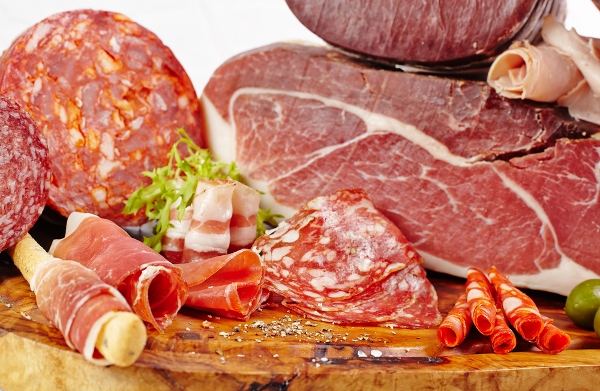 For those who enjoy their meat, the South West of England offers a veritable meat feast. From beef to venison, this region is proud of its heritage and history in producing the perfect livestock for the table.
Companies such as Bush Farm Catering in Bath offer alternative meats including bison and venison burgers. Naturally reared in Wiltshire, the company promotes its products as a “healthy alternative to traditional meats with 70% less fat than beef”.
Or if you prefer a more traditional taste, try the Devon pies and pasties from Chunk of Devon. This business grew from the back of a small butcher’s shop in a tiny Devon village until the current owners took it on in 2006 and the company started to win awards! Choose from a range of delicious pies including deli chicken bacon and leek, steak and kidney, steak and otter ale, steak stilton and mushroom and Chunk of Devon sheep pie.
Meet the Meat
Darts Farm sources the finest quality, locally produced and reared meat, the majority of which is traceable within a few miles in Devon. The company has its own herd of Ruby Red cattle, a native Devon breed until they reach full maturity, making for the best taste and texture.
If you like sausages, try Forked of Bath. “Gourmet sausages and mash with attitude” is the claim on the website. The company sources, cooks and serves quality bangers and mash from local suppliers from its mobile catering unit. Forked sausages, bully beef, traditional Cumberland and pure gluten free beef and chicken sausages are all on the menu along with primo italiano, herby lamb, spicy merguez, snorting boar and the BLP . . . big porker, cider and black pudding!
Prime Pork
Down at Powderham in Devon is Good Game who this year introduced exciting new recipes with soft charcuterie, rillettes and pates made from prime pork. According to a spokesperson from the company, everything is done by hand. “We cure using only salt and natural Exe estuary air. We use no Nitrates, saltpetre or curing agents. We don’t even use drying chambers – we do it the traditional way.” Try the Devon ruby steak burger or the spicy cooking chorizo sausage or the venison and pork burger.
Staying with pork, Kenniford Farm is a high welfare red tractor approved pig farm in East Devon established for over 20 years. The company breeds its own pigs on the farm for its award-winning pork, bacon, sausages and hog roasts. The hog roasting business started in 2000 and since it was launched has provided well over 3,000 hog roasts.
Take a look at Little Jack Horner and the perfect sausage roll! But these are not traditional rolls, they have a kick. Try the pork smoked chilli or the black pudding and apple flavours. There’s even a vegetarian option.
Finally, how do you fancy a bit of hand-sliced beef jerky? Cooked in a smoker using apple wood and charcoal, either silverside or topside British beef is cooked, trimmed and sliced by Privateer Jerky. If you can’t make it down to Devon, then follow the delicious beef jerky recipe kindly supplied by the company and attempt your own!
In other words if you’re attempting to serve from local suppliers, you can’t beat the meat feast from the South West for its variety whether it’s from butchers, shops, markets or farms like Proper Pork.
Published Date: 2nd August 2016
Category: Blog, Catering Business, News
Tags: Food producers
19 Jul |
South West Food Festivals Galore |
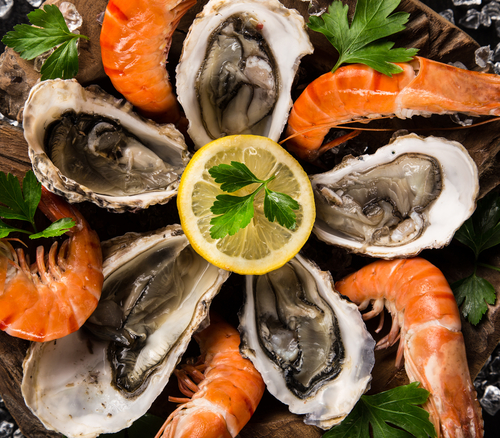 Summer is officially here and thoughts turn to holidays and food festivals. Every year, a hearty percentage of us brave the M5 and head south. This year will be no different and now is the time to be looking at alternative events to whet our appetites and possibly new suppliers of local food.
Lobster and Crab Feast
One event that should not be missed is the Clovelly lobster and crab feast, which celebrates the crustaceans sustainably caught by its fishermen and combines it with a great day out for all the family. The event will feature a variety of crab and lobster dishes cooked on the quay together with live folk music, chef cookery demonstrations, a prize draw for a magnum of champagne, local food and craft stalls, including plenty of freshly cooked lobsters and crabs, and beer tasting. There will also be entertainment in the form of street theatre, walkabout magic, balloon modelling and event-themed craft activities provided by The National Trust.
At the end of the event, baby lobsters will be released into Clovelly Bay in aid of the National Lobster Hatchery, Padstow whose lobster restocking project allows local fishermen bring pregnant female lobsters to the hatchery where their offspring are raised in captivity without predators. These young lobsters are raised to a size where they can be released back into the sea and look after themselves.
Even further south is the 2016 Liskeard & District Agricultural Show taking place on Saturday 9th July 2016 at The Showground, Merrymeet. One of the biggest events of its kind in the South West, there is plenty for everyone to see and do with the emphasis firmly on animals and a whole variety of fruit and vegetables.
If you are looking for something to end the summer with, try the Plymouth Seafood Festival which every year brings the area around The Barbican and Sutton Harbour alive with entertainment, activities and dishes. Plymouth is proud to be the first city in the world to be awarded the Fish2Fork Blue City status for its commitment to sourcing sustainable fish and will be celebrating its fishing heritage from 24 September 2016 – 25 September 2016.
A new event has been added to the calendar in Teignmough. Taste of the Teign is a new Estuary and Food Festival celebrating the provenance and local flavours of the Teign River Estuary and the event will last a week, from 19-25 September 2016. Local restaurants and cafes will feature special menus based on foods available from the Teign estuary and its environs. There will also be demonstrations including being shown how to shell and dress crab, to pressing your own apples to make cider.
There are too many food festivals to list individually across our region such as the Shaftesbury Super Sunday every 3rd Sunday; Bristol Multi and Thai Cultural Food 30-31st July; or later in the year Sturminster Newton Cheese 10-11th September and the Forest Showcase 2nd October.
Wherever you decide to go, enjoy the great food that producers around Britain have to offer and consider how you can offer more to support local producers. If you are catering at a food festival, don’t forget to check your appliance and equipment to make sure nothing goes wrong on the day.
Published Date: 19th July 2016
Category: Blog, Events, News
Tags: Events, Food producers
12 Jul |
South West Cheese Producers |
 “Give me a good sharp knife and a good sharp cheese and I’m a happy man.” Wise words indeed from Game of Thrones author, George R.R. Martin, but even he would be spoiled for choice if he ventured down amongst our South West cheese.
Gloucestershire, Devon, Dorset and Cornwall are renowned for their regional foods and cheese is integral to the menus of each region. We are all familiar with Cheddar and Gloucester Red varieties, but throw in a Dunlop or a Forest Oak and it gets more intriguing!
From Gloucester to Cornwall
Woefuldane Organic Dairy is a small family-run business in Gloucestershire which produces organic cheeses, such as Dunlop. The cheese was originally from a town called Dunlop in Ayrshire, then Woefuldane bought the setup 20 years ago when the original supplier sold up. From an ancient recipe, the cheese is now produced in Gloucestershire with a buttery texture and strong flavour.
Another favourite cheese is Forest Oak, which started life as a cloth ripened Dunlop. According to the company, “Forest Oak is smoked twice over oak chips at Severn & Wye Smokery in the Forest of Dean and this is noticeable in its rich yet subtle smoky taste and wonderful crumbly texture”.
Moving down to Dorset, the Woolsery Cheese Company has been the home of award-winning cheeses since 1992, with all produce suitable for vegetarians and gluten free. As well as flavours such as Meadowsweet soft cheese and English Herb Cheese, the company also regularly produces new flavours, including the soft mould ripened cheese, Nanette, which won Silver at the Taste of the West Cheese Awards. This traditionally handmade camembert style cheese ripens to give a white moulded rind with a firmer centre. What makes the company unique however is the launch of cheese wedding cakes to order!
Dorset Red Cheese
Still in Dorset, cheese lovers must taste the Ford Farm’s Dorset Red, a smoked cheese from cows on the company’s West Dorset Estate. Ford claims the cheese is “smooth and velvety, subtly infused with tones of smoked oak, reminiscent of barbecues and long, lazy summer days. Once bitten, forever smitten!” Other flavours include Cave Aged (a cloth-bound Cheddar aged deep within the Wookey Holes Caves), Billies’ Goat Cheddar and Oakwood smoked Cheddar.
In the Devon town of Newton St Cyres is Quickes, boasting a cheese-making legacy of nearly five centuries. 14 generations of the same family have been handcrafting cheeses from specially-bred cows on the farm, producing artisanal cheddar to suit every palate, from the Quicke’s Buttery cheddar to Quicke’s Mature and the two-year-matured Quicke’s Vintage.
Finally, Cornwall boasts a huge choice of cheeses, including the nettle covered Cornish Yarg which is only produced by Lynher Dairies in Ponsanooth in Cornwall but is exported over the world. 2016/17 will see the launch of the newest cheese, Cornish Kern, which is made to a different recipe and is longer maturing with a black waxy rind. The company also produces the Wild Garlic Cornish Yarg.
Cheese is a great British favourite and with so many varieties and flavours to choose from, the South West of England is way up there in cheese manufacture. So there can be no excuses really to prevent the region’s pubs, cafes and restaurants from showcasing truly local South West cheese on their menus.
Published Date: 12th July 2016
Category: Blog, Catering Business, News
Tags: Care homes, Food producers, Pubs, Restaurant, schools